When a lawn is mostly bare, full of weeds or sitting on thin, compacted soil, patching will not fix it. We bring in fresh loam, grade it, seed it and cover it with straw where it needs it, so the new lawn starts right.
When a lawn is mostly bare, full of weeds or sitting on thin, compacted soil, patching will not fix it. We bring in fresh loam, grade it, seed it and cover it with straw where it needs it, so the new lawn starts right.
We run consistent routes across South Hadley, Granby, Chicopee, Belchertown, Holyoke, Florence, Northampton, Easthampton, Hadley and 10 more towns across the Pioneer Valley. That means fast scheduling, local knowledge, and crews who already know the area's soil, weather and quirks.
Get My Free QuoteFresh loam spread and graded to fill low spots, raise thin soil and give new grass a proper root zone.
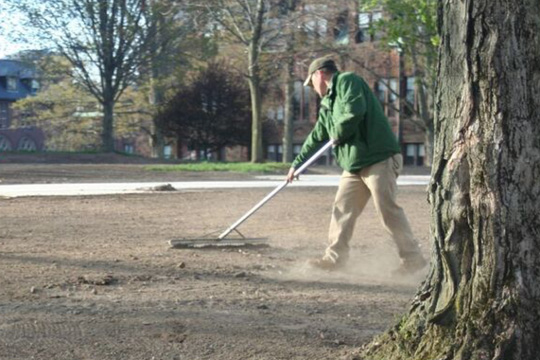
New loam, graded and raked smooth, then seeded. The standard way to rebuild a bare or torn-up lawn.
The same, with straw over the seed to hold moisture and keep it from washing out on slopes and in heavy rain.
Power raking to pull out a thick thatch layer that blocks water and seed. Often the first step before reseeding.
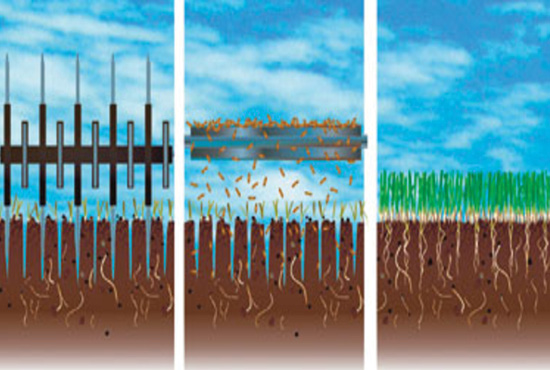
Lawn just thin, not gone? Core aeration with broadcast, slice or compost seeding thickens it without starting over.
Yards torn up by a build, a septic job or drainage work, regraded and brought back to lawn.
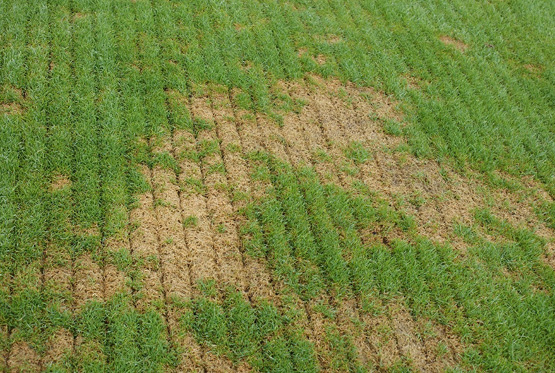
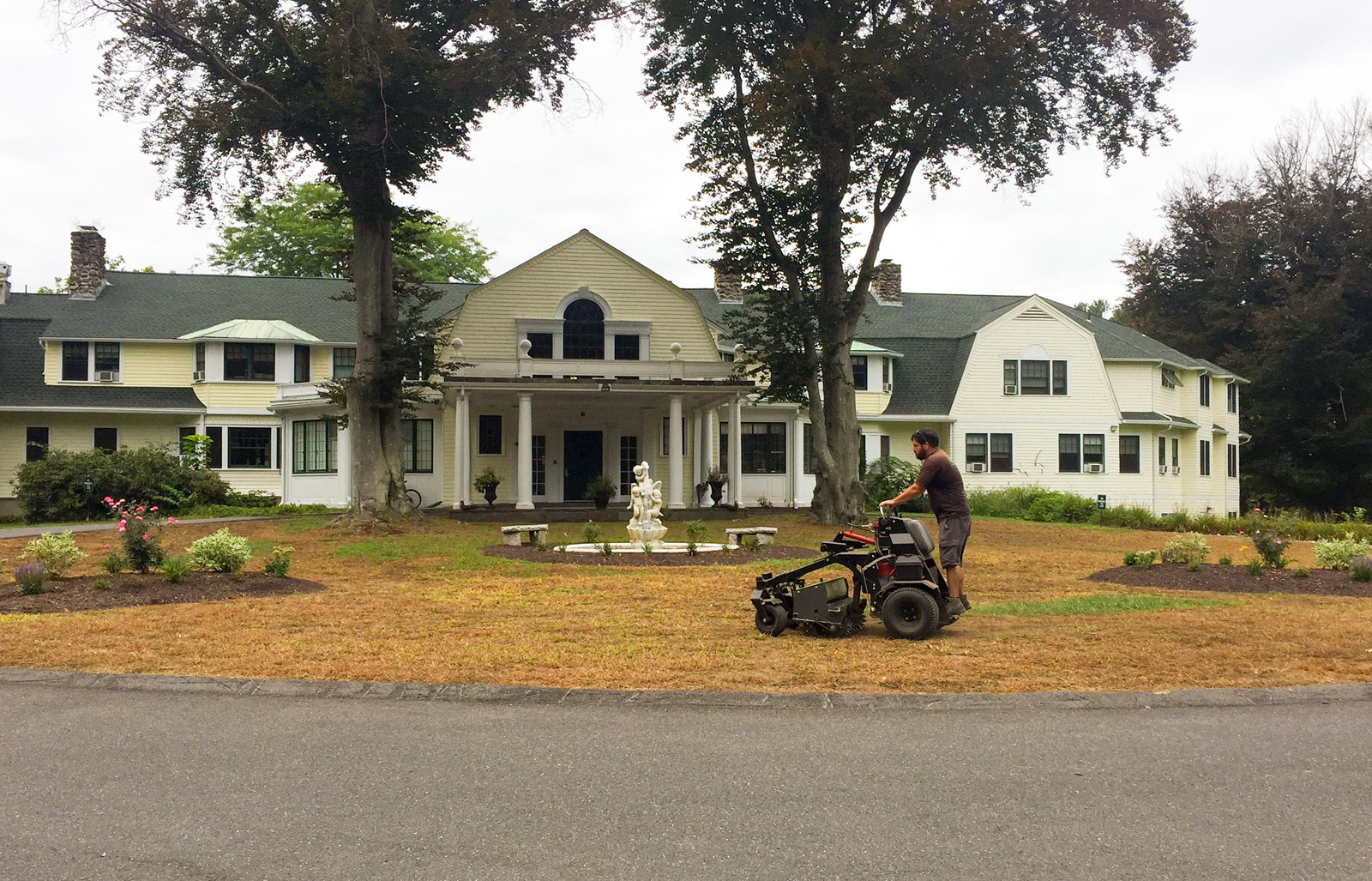
From fresh loam to new grass: our crew at work, and what new seed looks like as it fills in.
Loam work is priced after we see the area: depth, grade and access all change the job. You get a written price before we start.
New lawns do best seeded in late summer and early fall, with spring as the second window. We schedule the work so the seed has time to root before summer heat or frost.
Our fertilizing program and fall aeration keep a new lawn thick, so you do not end up renovating it again.
Straight answers to the questions we hear most from Western Mass homeowners.
If more than about half of the lawn is bare, weeds or a grass you do not want, or the soil underneath is thin, compacted fill, overseeding will not catch up. Renovation starts over with fresh loam and seed. If the lawn is just thin, aeration with seeding is usually enough.
It depends on the area, how much loam it needs, the grade and how easily equipment can reach it. We walk the property and put the price in writing before any work starts.
Fresh loam, which is screened topsoil, spread over the area, graded and raked smooth, then seeded. It gives new grass a few inches of good soil to root into, which matters on lots where the topsoil was stripped or never there.
Straw shades the seed, holds moisture and keeps seed and loam from washing away in heavy rain, especially on slopes. The new grass grows up through it.
Seed usually comes up in one to three weeks, depending on the grass and the weather. Plan on keeping foot traffic off for the first six to eight weeks, and until the new grass has been mowed a few times.
Thatch is the layer of dead stems and roots between the grass and the soil. When it gets thick it blocks water, fertilizer and seed. Dethatching, or power raking, pulls it out, and it is often the first step before reseeding a tired lawn.
Keep the top of the soil moist with light watering once or twice a day until the seed is up, then water less often and more deeply as it fills in. Watering is the biggest factor in how a new lawn comes in.
Tell us about your property and what you need. We'll follow up within one business day.
